
Kanyamazane, Tekwane and Pienaar Among Areas Affected by Ongoing Load Reduction
Written by Xola Magagula on April 16, 2026
While South Africa is currently experiencing a suspension of national loadshedding, many communities such as Kanyamazane, Tekwane and Pienaar are still facing daily power interruptions through load reduction. These outages typically occur during peak hours, from 05:00 to 07:00 am and again from 19:00 to 21:00 pm, leaving many residents confused about why power cuts persist despite improved national electricity supply.
The key difference lies in the reason behind these outages. Unlike loadshedding, which is implemented when there is not enough electricity generation to meet national demand, load reduction is a targeted intervention. It is used in specific high-risk areas where electricity infrastructure is under severe strain.
According to Eskom, illegal connections and electricity theft are the main causes of this strain. In areas like Kanyamazane and Tekwane, unauthorized connections place excessive pressure on transformers and mini-substations. This overloading increases the risk of equipment failure, which could result in prolonged outages lasting weeks or even months.
To prevent such damage, Eskom deliberately reduces the electricity load during peak usage times. This protective measure ensures that infrastructure is not completely destroyed, even though it means scheduled interruptions for residents. Importantly, this happens even when the country has enough electricity generation capacity overall.
Electricity Minister Kgosientsho Ramokgopa has identified one major solution to ending load reduction: the rollout of smart meters. These advanced meters allow Eskom to monitor electricity usage in real time, detect illegal connections, and remotely disconnect offenders without affecting entire communities.
The minister has stated that the widespread installation of smart meters is central to eliminating load reduction in the coming years. Once fully implemented, Eskom will be able to deal directly with households that are bypassing the system, instead of cutting power to entire neighborhoods like Kanyamazane and Pienaar.
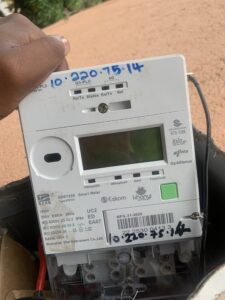
The image shows a close-up of a smart electricity meter being held in one hand. The meter has a digital display showing that the picture was taken during load reduction.
There has already been notable progress. Eskom recently announced that more than 200,000 customers across the country have been freed from load reduction. In fact, 210,000 customers are no longer subjected to power cuts during peak periods following targeted interventions in overloaded areas. These improvements come from a combination of smart meter installations, infrastructure upgrades, and efforts to reduce illegal connections.
However, challenges remain in municipalities like the City of Mbombela, where Kanyamazane, Tekwane and Pienaar are located. The municipality continues to experience high levels of electricity losses due to theft, illegal connections, and ageing infrastructure. This has made it difficult to fully stabilize the network.
To address this, local authorities have introduced initiatives such as debt relief programmes and campaigns to encourage residents to legalize their electricity connections. At the same time, Eskom continues to roll out smart meters and upgrade network infrastructure in affected areas.
Until these interventions are fully implemented, load reduction will remain a reality for many households in Mbombela. Communities like Kanyamazane, Tekwane and Pienaar will continue to experience scheduled outages as a way of protecting the electricity network from collapse.
The long-term solution is clear: reducing illegal connections and completing the smart meter rollout. Once these measures are in place, Eskom will be able to stabilize local networks and eventually eliminate load reduction altogether.
For now, residents are encouraged to use electricity responsibly and support efforts to protect critical infrastructure, as the actions of a few continue to impact entire communities.